Skip to content

The science

Scientifically proven, zero effort.

Allergy immunotherapy with two decades of mucosal-immunology research behind it — delivered through the one ritual you already keep once a day.

The Easily compounding laboratory — three scientists in white coats at multi-screen molecular-analysis workstations, surrounded by chemistry glassware and Laboratory Quality Certification signage, with an Easily cyan toothpaste bottle on a counter in the foreground.

Headline findings

The three doors

Three routes. Same biology. Different daily life.

Shots, drops, and toothpaste all retrain the immune system. They differ on three things that matter: how much of your day they cost, how strong the evidence is so far, and what they ask of you to keep working.

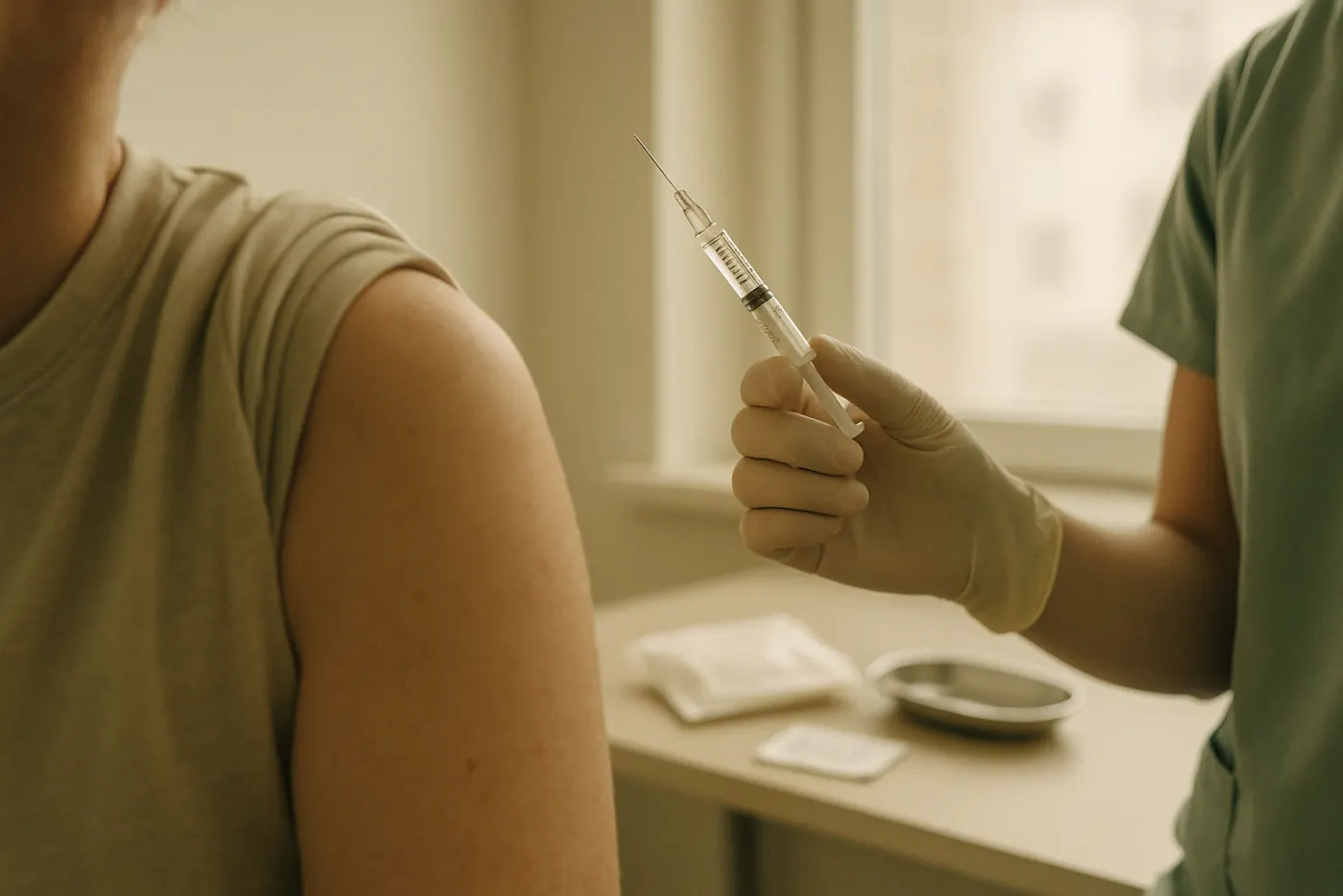
A clinic exam room: a nurse's gloved hand prepares an immunotherapy injection while a patient's bare arm sits in the foreground.

SCIT · Allergy shots

Weekly clinic visit

A nurse, a needle, a thirty-minute observation period afterward in case of systemic reaction. Years of weekly appointments.

Evidence
Decades of Phase 3 data — the gold standard for moderate-to-severe allergic disease.
Regulatory
FDA-licensed standardized allergen extracts as biologics. The practitioner-formulated mix is administered under medical supervision.
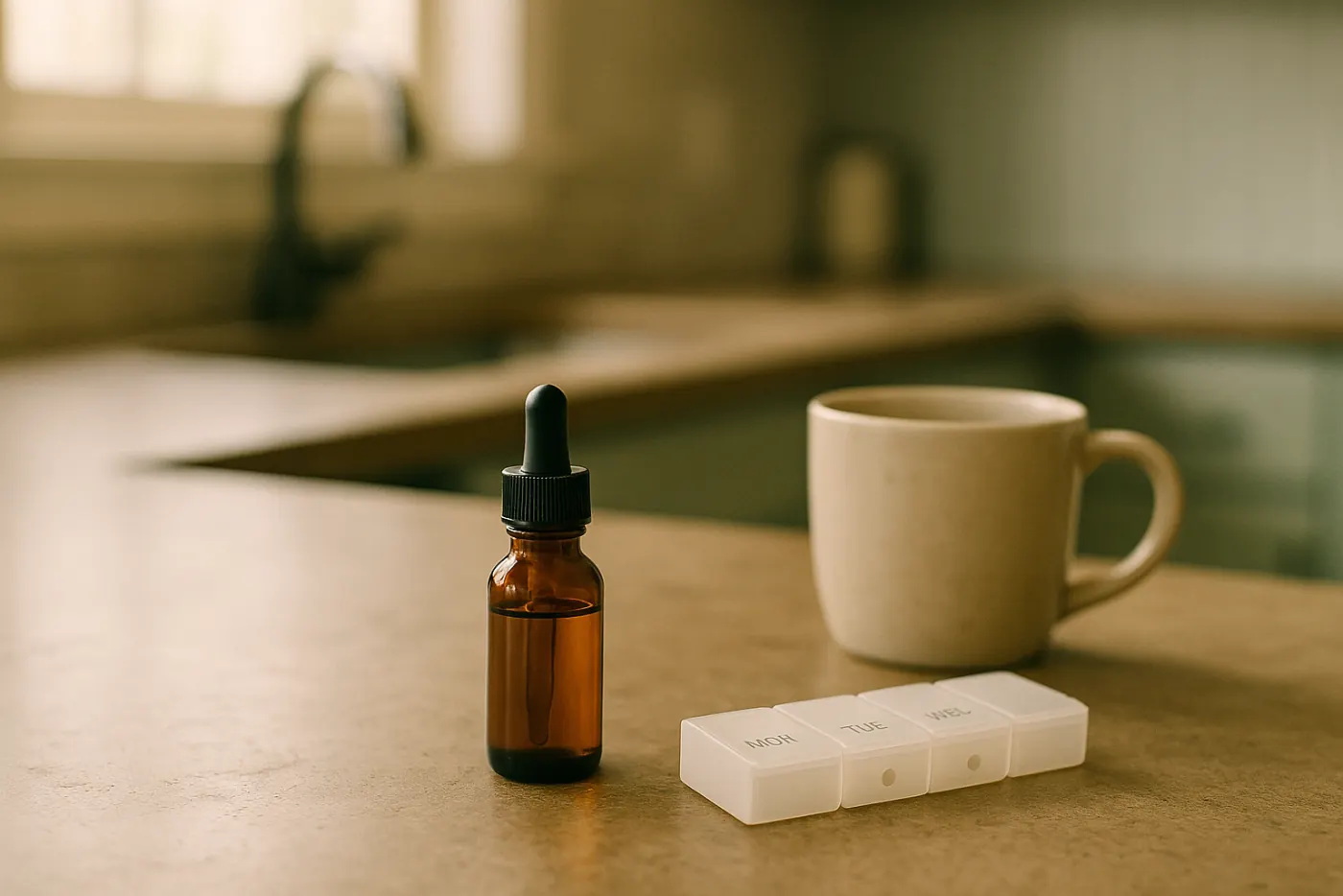
A kitchen counter: a small amber dropper bottle for sublingual allergy drops next to a weekly pill organizer and a coffee mug.

SLIT · Sublingual drops

Hold and don't swallow

Drops held still under the tongue for two minutes. No swallowing, no movement, no eating or drinking afterward. Three times a day, every day.

Evidence
Strong evidence base; SLIT tablets have multi-year Phase 3 trials and are widely used in Europe.
Regulatory
FDA-approved sublingual tablets exist for grass and ragweed. Drops for other allergens are practitioner-prescribed off-label.
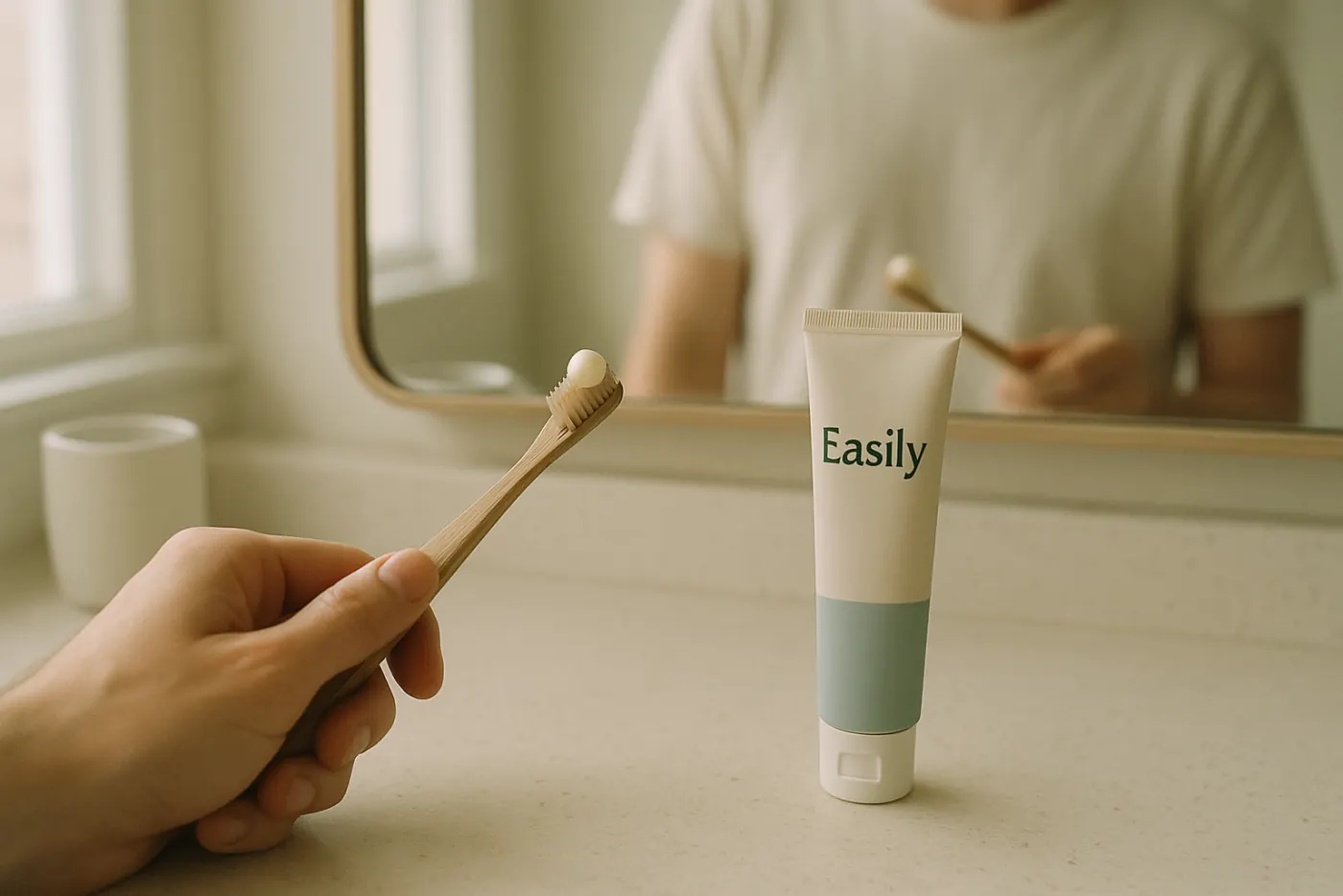
A bathroom mirror at morning: a hand holds a wooden toothbrush next to an Easily-branded toothpaste tube.

OMIT · Easily

Nothing new

The morning you were already having. The immunotherapy is in the toothpaste — once a day, alongside the brushing routine you already keep.

Evidence
Two decades of mucosal-immunology research underneath: the oral vestibule has the body's highest density of tolerogenic Langerhans cells (Allam et al., Allergy, 2008). Reisacher's group translated that biology into a toothpaste vehicle; the Phase 1 RCT (OMEGA, 2025) showed 100% tolerance at top dose and 97% adherence.
Regulatory
Compounded under the FDA's §503A pathway. Inputs are FDA-listed; the finished product is not a branded FDA-approved drug.

Shots and drops have the deepest evidence. OMIT has the lowest daily-life cost. Adherence is the difference between a cure and a treatment people quit.

In real-world data, roughly 37% of patients on shots and 10–14% on drops reach the recommended 3-year course (Lemberg et al., J Allergy Clin Immunol Pract, 2020). The cure that fits the morning you already have is the one you finish.

Skip ahead? — take the five-minute eligibility quiz →

How it works

How OMIT works, in three beats.

The biology of how a toothpaste-delivered allergen extract teaches the immune system tolerance — from the first morning brush to the regulatory T-cell response six months in.

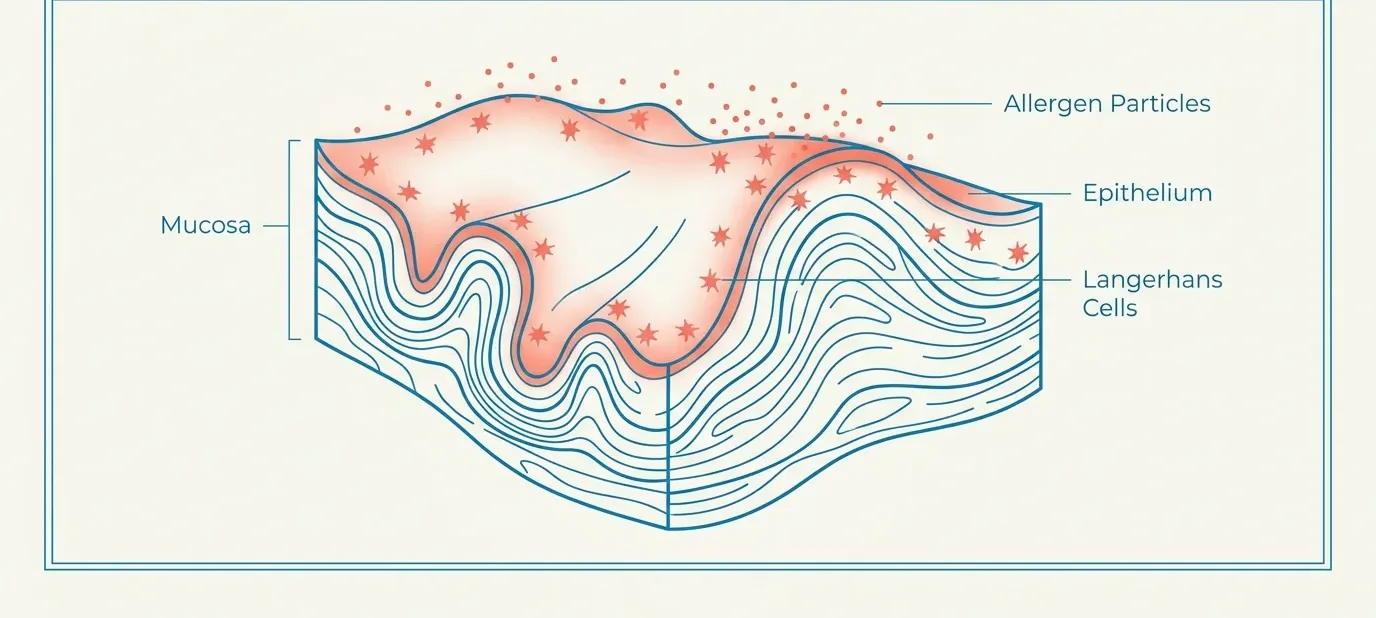
Cross-section of the oral mucosa showing the epithelium, Langerhans cells, and allergen particles in sustained contact with the tissue surface.

1. Sustained contact, once a day.

The toothpaste sits against the inside of your cheek and gum for the two minutes you already brush.

That tissue happens to have the body's highest density of immune-pattern-recognition cells (Langerhans cells), biologically wired to teach the immune system what's safe. The mucoadhesive vehicle holds the extract there long enough for them to do their job.

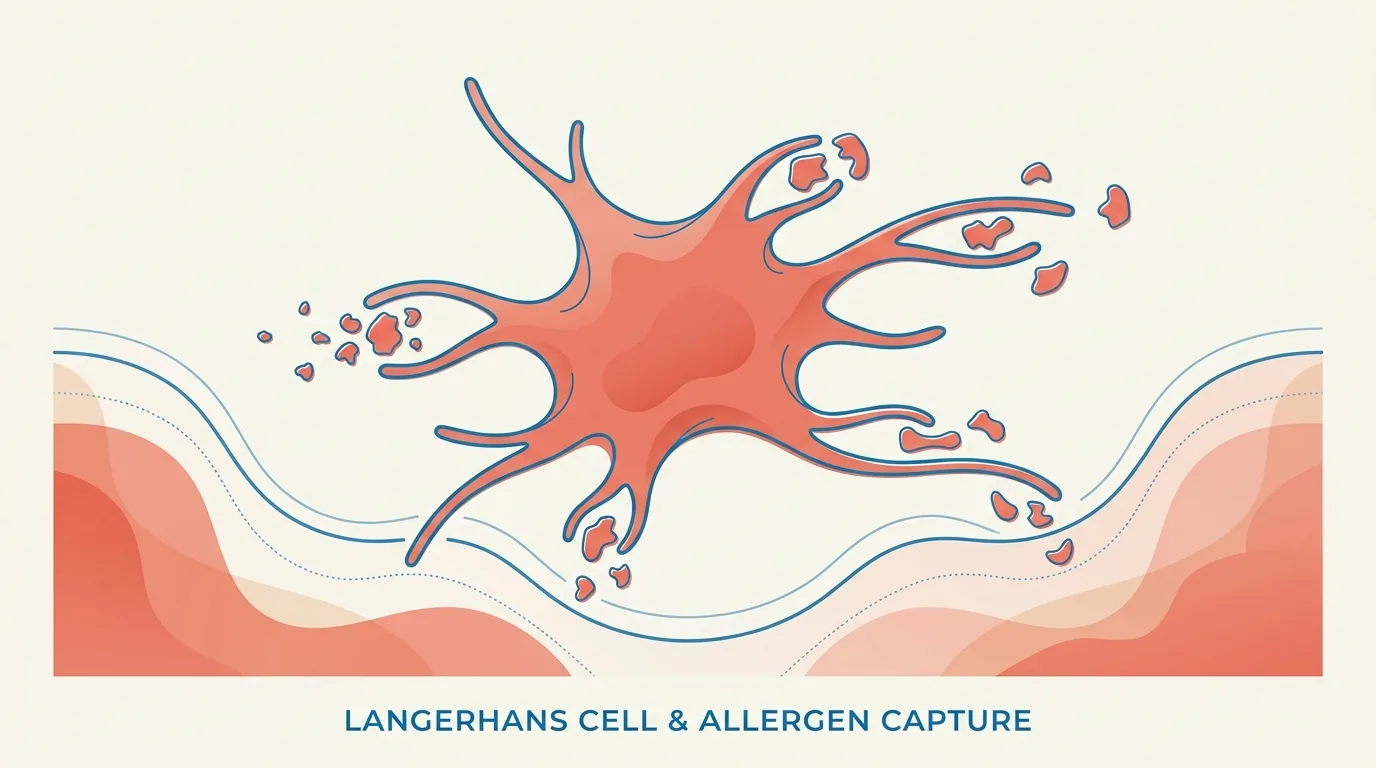
A single Langerhans cell extending its dendrites to capture allergen fragments from the surrounding mucosa.

2. The immune system takes a look.

Those cells grab tiny pieces of the allergen and show them to the rest of your immune system.

The same way your body learns to tolerate everything else it meets — food, dust, the cat. The cells carry the fragments to regional lymph nodes and present them as something safe.

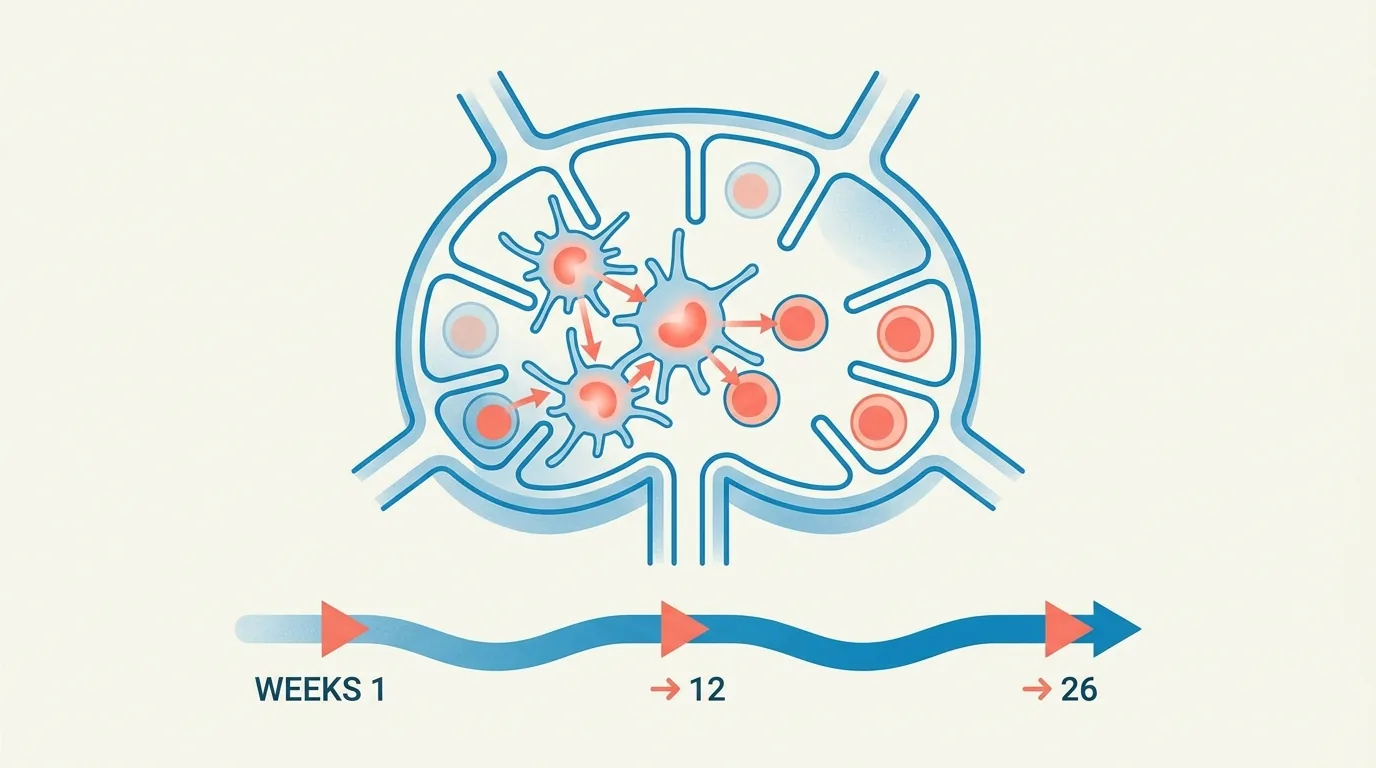
Regulatory T-cells expanding in a lymph node over a 1 → 12 → 26 week timeline, building tolerance to the presented allergens.

3. The reaction stands down.

Over six to twelve months, your immune system shifts from reacting to allowing.

The reactive antibody class (IgE) drops; the blocking antibody class (IgG4) rises. Symptoms ease. Same endpoints the shot and drop literature targets — the standard for measuring whether immunotherapy is working.

The discovery

It didn’t start in a research lab. It started at a bathroom mirror.

“I was at home brushing my teeth. All the foamy residue I’m brushing my teeth with is covering the exact areas I want my extracts to go. That ignited an inferno inside my brain. It was my aha! moment.”

— William R. Reisacher, MD, Ideator and Professor of Otolaryngology at Weill Cornell Medicine

William R. Reisacher, MD — Ideator and Professor of Otolaryngology at Weill Cornell Medicine.

The ask

You want a fix for your allergies?
Well then we’ll need 0% effort from you.

~98%

of American adults brush their teeth daily.

The one ritual nearly everyone keeps — without thinking.

Every other allergy treatment asks you to add a new ritual: a clinic visit, drops three times a day, a habit you have to remember. Easily ships its medicine inside the ritual you already keep. The cure that works in real life is the one you don’t have to think about.

The proof of the ask

Your three real options, mapped.

Where each approach lands on a familiar trade-off — how much your immune system actually changes, against how much of your day it costs. Easily occupies a quadrant no other option does.

Allergy-treatment trade-offs: disease modification vs daily life impactA two-axis chart plotting five allergy treatment options. Allergy shots: very high life impact, high disease modification. Sublingual drops: medium impact, medium-high modification. OTC antihistamines: low impact, no modification. No treatment: zero on both. Easily: low life impact, high disease modification — occupying a quadrant no other option does.Daily life impact →Disease modification →No treatmentOTC antihistaminesSublingual dropsAllergy shotsEasily
Position is qualitative, drawn from the published evidence + real-world adherence data. Shots and drops are mature treatments with decades of trials behind their disease-modifying claim; antihistamines mask symptoms without changing the underlying allergy.

Shots and drops carry the deepest disease-modifying evidence and the highest life-impact cost. Antihistamines fit any morning but don’t change the disease. Easily is the only delivery that does meaningful immunotherapy inside a routine you already keep.

See if you fit the eligibility profile — take the five-minute quiz →

The evidence

OMIT extends an FDA-approved category.

Mucosal-route allergen immunotherapy isn’t new and isn’t fringe. Two products are already FDA-approved using the same biological principles. OMIT is the next delivery in that field — same mucosa, different vehicle.

2008

The biology

The Bonn group maps the oral vestibule as the highest-density tolerogenic Langerhans-cell site in the mouth — the foundation under every mucosal-route immunotherapy that followed.

Allam et al., Allergy →

2014

FDA approves SLIT

First sublingual immunotherapy tablet — Oralair for grass-pollen allergy, ages 10–65. The route is mucosal; the patient holds the tablet under the tongue.

Stallergenes · April 2014

2020

FDA approves OIT

First oral immunotherapy for a food allergen — Palforzia for peanut allergy, ages 4–17. Mucosal exposure scaled into a regulated finished drug.

Aimmune · January 2020

Easily extends that field. Same mucosal-route biology, delivered through a toothpaste vehicle alongside the brushing routine. Four papers anchor the specific OMIT evidence — the 2014 vehicle rationale, the 2016 head-to-head pilot, the 2022 real-world adherence survey, and the 2025 Phase 1 RCT.

  1. 2014

    International Journal of Pharmaceutical Compounding

    The toothpaste-vehicle formulation rationale.

    “The oral vestibule contains the highest density of Langerhans cells in the body — and a mucoadhesive toothpaste vehicle holds allergen extracts in sustained contact with that tissue alongside the brushing routine patients already keep.”
    Read the paper →
  2. 2016

    Allergy & Rhinology

    12-month head-to-head pilot: OMIT vs SLIT.

    “OMIT and SLIT demonstrated similar safety profiles and adherence rates… The adherence rate was 80% for the OMIT group and 62% for the SLIT group.”
    Read the paper →
  3. 2022

    International Forum of Allergy & Rhinology

    The patient-retention signal — across SCIT, SLIT, and OMIT.

    “Every OMIT user surveyed said their therapy was helping. Shots and drops topped out around 80%.”
    Read the paper →
  4. 2025

    Annals of Allergy, Asthma & Immunology

    Toothpaste-vehicle safety, validated at the hardest bar.

    “Active subjects adhered to the treatment for 97% of the days in the study, with no withdrawals due to study medication.”
    Read the paper →
Funding disclosures + full citations

Reisacher W, Rudner S, Kotik V. Oral mucosal immunotherapy using a toothpaste delivery system for the treatment of allergic rhinitis. International Journal of Pharmaceutical Compounding. 2014;18(4):287–290.

Reisacher WR, Suurna MV, Rochlin K, Bremberg MG, Tropper G. Oral mucosal immunotherapy for allergic rhinitis: a pilot study. Allergy & Rhinology (Providence). 2016;7(1):21–28.

n=24 enrolled (12 per arm) at Weill Cornell Medicine. With this sample size the adherence difference did not reach statistical significance (p=0.61) — directional, in the direction the mechanism predicts. IgG4 — the standard immunotherapy biomarker — rose significantly in both arms (OMIT p=0.048; SLIT p=0.003).

Supported by NYSTAR, the American Academy of Otolaryngic Allergy Foundation, and Allovate (the developer of the vehicle used in the study). Two authors — Reisacher and Rochlin — were Allovate shareholders; Reisacher was an Allovate adviser. Allovate is unrelated to Easily; Reisacher's role at Easily is unpaid and equity-free.

Ballakur S, Suurna MV, Rochlin K, Bremberg MG, Reisacher WR. Allergy immunotherapy from the patient’s perspective: a single-institution retrospective survey. International Forum of Allergy & Rhinology. 2022.

Single-institution retrospective survey of 79 adults on allergy immunotherapy spanning 2014–2019. 100% of OMIT users reported the therapy helpful, vs 80% on shots (SCIT) and 81% on drops (SLIT). Real-world signal, not a randomized trial — but the cleanest cross-modality patient-retention comparison in the literature.

Berger WE, Faris N, Weinstein M, Wilding GE, Berglund E. OMEGA / INT301 Phase 1: toothpaste-vehicle OMIT in peanut allergy. Annals of Allergy, Asthma & Immunology. 2025;134(4):448–456.

Randomized, placebo-controlled Phase 1 (n=32, 3:1 active-vs-placebo). Conducted in peanut allergy — the most anaphylactic protein-allergen class in clinical use. The vehicle safety at the hardest bar transfers to airborne extracts; airborne clinical outcomes are evidenced separately by the Reisacher 2016 head-to-head. INT301 and Easily are separate products, run by separate groups (Intrommune Therapeutics).

Convinced the evidence is real? — take the five-minute eligibility quiz →

William R. Reisacher, MD — Ideator and Professor of Otolaryngology at Weill Cornell Medicine.

William R. Reisacher, MD

Professor of Otolaryngology, Weill Cornell Medicine · Founding medical advisor

Allovate, surfaced. His 2016 paper disclosed Allovate funding and that he was an Allovate shareholder. Allovate developed the vehicle in that study; Easily licenses its own formulation. Named here so you don’t find it in a footnote.

The institutional picture

Named doctor, named pathway, named gap.

The bench

Lead author of the 2014 vehicle paper and the 2016 head-to-head pilot. His role at Easily is uncompensated — no equity, no salary, no consulting fee.

The pathway

FDA-listed allergen extracts, compounded by a state-licensed §503A pharmacy, prescribed by a US-licensed clinician. That’s how the prescription becomes real medicine. It also means we can’t say “FDA-approved” — compounded medicines are regulated through a different pathway than branded finished drugs.

The honest gap

No airborne-allergen Phase 2 or 3 trial is currently funded or enrolling. The §503A pathway lets the medicine ship today on the existing literature; a branded approval would require sponsor investment the field hasn’t yet committed.

Full advisor team — home page Advisors section. Healthcare professionals — hello@easilyhealthcare.com.

The fit

Who shouldn’t use this.

Mucosal-delivered immunotherapy carries a low systemic-reaction risk, but it isn’t appropriate for everyone. The eligibility quiz screens for:

  • · Pregnancy or breastfeeding
  • · Prior anaphylaxis to immunotherapy
  • · Severe or uncontrolled asthma
  • · Current beta-blocker therapy
  • · Current immunosuppressant therapy
  • · Children under five

The full safety picture — what to expect in the first weeks, what to watch for, when to call your provider, when to call 911 — lives at /safety.

Take the eligibility quiz

Ready to see if you’re a candidate?

The eligibility quiz takes five minutes. Your specific allergens, your medical history, your honest answers. Your provider reviews everything before anything ships.

Take the quiz →